Ecolink, Inc.
Q
  1. Home
  2. N-Propyl Bromide
  3. n-Propyl Bromide Replacement

n-Propyl Bromide Replacement

Last updated:

n-Propyl Bromide Exposure Risks

In March 2013, National Toxicology Program (NTP) and a panel of experts unanimously voted to list 1-bromopropane, also known hazardous chemicals as nPB, CAS # 106-94-5, as a “reasonably anticipated to be a human carcinogen,” based on the animal studies presented by NTP to include as part of their 13th Report on Carcinogens (RoC). This coincides with a study by US Department of Defense to lower TLV-TWA to 0.1 PPM.
Vapor Degreasing

For almost 20 years, nPB served as a drop-in replacement for chlorinated solvents such as TCE and PERC to remove adhesives, greases, hydraulic fluids, metalworking fluids, oils, sealants and waxes in vapor degreasing operations.  Enviro Tech, Petroferm and Solvon are primary suppliers for bulk cleaning.

Currently, fluorinated blends (HFC, HFE and HFPO) offer much higher & safer work exposure limits (200 PPM versus 0.1 PPM) and added benefits of reduced material handling (i.e. stabilizing, acid acceptance testing and dumping/recharging solvent), energy reduction (almost 40%, 43C vs 71C), superior cleaning performance at a lower lifecycle cost of ownership.

Email or call 888-996-8436 ext 125.

Aerosol Applications

nPB is readily used and packaged in aerosol cans for the effective removal of grease, oil, corrosion and sludge from gears, bearings, motors and contact cleaning where sensitive plastics are not involved. CRC® and LPS® are two primary aerosol providers of various blends with nPB. If you are using No Flash, Electra X or Electronic Degreaser, Super Degreaser it is time to switch and reduce your worker’s exposure to nPB.

Ecolink offers multiple custom blends that are safer, cost-effective and perform. Email or call 888-996-8436 ext 125.

Replacement by the Numbers chalkboard
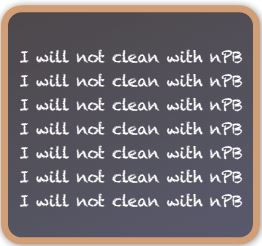
For vapor degreasing applications, the acquisition cost of nPB at $4-6/lb. compared to fluorinated options at $9-12/lb. is not the way to calculate replacement costs. Solvent bath life and process time (up time) will more than offset acquisition cost variance with most conversions generating positive ROI and cash flow in less than 12 months. For aerosol applications, cost $/can is flat. Fair market value:

Degreasing    = $12-22/can

Defluxing    = $9-18/can

Contact cleaning    = $15-25/can

Search here

Don’t forget to share this post!

Categories

Suggested Blog Posts

View all News
By Mark
Common Causes of Foaming in Industrial Water and Effective Control Methods
Jul 17 2026

Common Causes of Foaming in Industrial Water and Effective Control Methods

Excessive foam in industrial water systems disrupts operations, reduces treatment efficiency, causes overflow events, and creates worker safety hazards that cost...
By Mark
Key Benefits of Using an Aerosol Degreaser for Electronics
Jul 13 2026

Key Benefits of Using an Aerosol Degreaser for Electronics

Grease, flux residue, dust, and moisture accumulation on circuit boards and electrical contacts are among the leading causes of premature equipment failure in...
By Mark
What Is a Flux Remover: Benefits, Usage, and Appropriate Selection Guide
Jul 10 2026

What Is a Flux Remover: Benefits, Usage, and Appropriate Selection Guide

Flux residues left on printed circuit boards after soldering are one of the leading causes of premature electrical failures in electronics manufacturing. These...
By Mark
How Do Water-Based Cleaners Remove Grease from Industrial Metal Parts Safely
Jul 10 2026

How Do Water-Based Cleaners Remove Grease from Industrial Metal Parts Safely

Water-based cleaners remove grease from industrial metal parts safely by using surfactants, pH builders, emulsifiers, corrosion inhibitors, heat, and agitation to...
By Khatera Barati
Khatera Barati - Digital Marketing Content Intern
Jul 07 2026

From WordPress to SEO: My Ecolink Marketing Internship

Reflecting on My Marketing Internship at Ecolink As my internship with Ecolink comes to an end, I’ve had the opportunity to reflect on how much I’ve learned over the...
By Mark
Why Industrial Lubricants Are the Backbone of Modern Machinery
Jul 06 2026

Why Industrial Lubricants Are the Backbone of Modern Machinery

Improper lubrication causes 64% of bearing failures, making it the single greatest preventable cause of machinery breakdown across every industrial sector. That...
By Mark
What Is an Epoxy Paint Stripper and What Are Its Uses?
Jun 29 2026

What Is an Epoxy Paint Stripper and What Are Its Uses?

An epoxy paint stripper is a heavy-duty chemical solution used to soften, swell, and remove cured epoxy paint from surfaces where standard paint removers are...
By Mark
How Boiler Water Treatment Chemicals Prevent System Corrosion
Jun 25 2026

How Boiler Water Treatment Chemicals Prevent System Corrosion

Boiler water treatment chemicals prevent system corrosion by controlling the conditions that allow metal attack: dissolved oxygen, carbon dioxide, low pH, hardness...
By Mark
Types of Water Treatment Chemicals
Jun 22 2026

Types of Water Treatment Chemicals

Choosing the right water treatment chemicals starts with knowing what the water contains, what the system needs to protect, and what regulations apply. The main types...
By Mark
Industrial Lubricants: Types, Uses, and How They Work
Jun 19 2026

Industrial Lubricants: Types, Uses, and How They Work

Industrial lubricants reduce friction, control heat, protect parts, and help industrial machinery run reliably under demanding operating conditions. If you need to...
View all News