Ecolink, Inc.
Q
  1. Home
  2. Ecolink News
  3. Balancing Industrial Cleaning Requirements with Worker Safety

Balancing Industrial Cleaning Requirements with Worker Safety

Last updated:

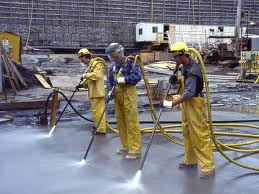
Company owners are responsible for the well being of their employees, and should implement safety procedures and protocol to maintain the safety of those workers while performing their duties. You probably would not find a business owner who would disagree with that statement. Having said that, the degree of danger workers place themselves in at the work place varies greatly, depending on the type of industry for which they are employed. As it pertains to industrial jobs – working with parts, metals, materials, and other industrial and mechanical products – there might not be another career where the calculated risk performing duties is greater. Most business decision makers stress over the physical requirements of a job site, or the heavy machinery and products that, if handled incorrectly, could cause serious harm or injury to an employee. However, at most of the job sites where parts, metals, and materials come through on a regular basis, these products need to be cleaned before being put into operation. This means workers will be handling industrial cleaners to rid these products of dirt, grime, stains, grease, rust, and other particles that could negatively affect a product’s functionality. Business owners need to realize that, if they have not switched to an eco friendly or green alternative industrial cleaning solvent, there is a chance of a mitigation of worker safety.

Older industrial cleaning products use ingredients and chemical agents that can negatively affect people using the chemical, even those within close proximity to the chemical cleaning solution. These hazardous agents can even hurt the environment. However, Ecolink1 even with this in mind, company owners might be hesitant to make the transition to a new cleaning solution because of the reliability of the current solvent. The key for business owners what need to maintain the quality of worker safety, but still incorporate the use of a trustworthy industrial cleaning solvent need to find a method of balancing their industrial cleaning requirements with worker safety. That is why it is imperative for these owners to become more educated on new, solvent degreasing, eco friendly cleaners and degreasers that can clean and degrease as well as older solutions, and also provide a much higher level of worker safety those older solutions cannot provide. The best way to educate owners is through the interaction of organizations whose purpose is to inform and redirect industrial businesses that use cleaning solvents to transition to green alternative chemical agents. One company that can lend assistance is Ecolink.
Ecolink has been providing vast knowledge to industrial companies for a long time, providing statistics on chemical compounds that are hazardous and unsafe for people and the environment, while at the same time providing eco friendly alternatives that have proven to clean and degrease products without any drop off in efficiency whatsoever. It is recommended to any industrial organization that has not already made a switch to newer and safer cleaning agents to consult with Ecolink, so your business can effectively balance industrial cleaning requirements with worker safety, while at the same time lowering your cost of purchasing industrial cleaning solutions.

Search here

Don’t forget to share this post!

Categories

Suggested Blog Posts

View all News
By Mark
Common Causes of Foaming in Industrial Water and Effective Control Methods
Jul 17 2026

Common Causes of Foaming in Industrial Water and Effective Control Methods

Excessive foam in industrial water systems disrupts operations, reduces treatment efficiency, causes overflow events, and creates worker safety hazards that cost...
By Mark
Key Benefits of Using an Aerosol Degreaser for Electronics
Jul 13 2026

Key Benefits of Using an Aerosol Degreaser for Electronics

Grease, flux residue, dust, and moisture accumulation on circuit boards and electrical contacts are among the leading causes of premature equipment failure in...
By Mark
What Is a Flux Remover: Benefits, Usage, and Appropriate Selection Guide
Jul 10 2026

What Is a Flux Remover: Benefits, Usage, and Appropriate Selection Guide

Flux residues left on printed circuit boards after soldering are one of the leading causes of premature electrical failures in electronics manufacturing. These...
By Mark
How Do Water-Based Cleaners Remove Grease from Industrial Metal Parts Safely
Jul 10 2026

How Do Water-Based Cleaners Remove Grease from Industrial Metal Parts Safely

Water-based cleaners remove grease from industrial metal parts safely by using surfactants, pH builders, emulsifiers, corrosion inhibitors, heat, and agitation to...
By Khatera Barati
Khatera Barati - Digital Marketing Content Intern
Jul 07 2026

From WordPress to SEO: My Ecolink Marketing Internship

Reflecting on My Marketing Internship at Ecolink As my internship with Ecolink comes to an end, I’ve had the opportunity to reflect on how much I’ve learned over the...
By Mark
Why Industrial Lubricants Are the Backbone of Modern Machinery
Jul 06 2026

Why Industrial Lubricants Are the Backbone of Modern Machinery

Improper lubrication causes 64% of bearing failures, making it the single greatest preventable cause of machinery breakdown across every industrial sector. That...
By Mark
What Is an Epoxy Paint Stripper and What Are Its Uses?
Jun 29 2026

What Is an Epoxy Paint Stripper and What Are Its Uses?

An epoxy paint stripper is a heavy-duty chemical solution used to soften, swell, and remove cured epoxy paint from surfaces where standard paint removers are...
By Mark
How Boiler Water Treatment Chemicals Prevent System Corrosion
Jun 25 2026

How Boiler Water Treatment Chemicals Prevent System Corrosion

Boiler water treatment chemicals prevent system corrosion by controlling the conditions that allow metal attack: dissolved oxygen, carbon dioxide, low pH, hardness...
By Mark
Types of Water Treatment Chemicals
Jun 22 2026

Types of Water Treatment Chemicals

Choosing the right water treatment chemicals starts with knowing what the water contains, what the system needs to protect, and what regulations apply. The main types...
By Mark
Industrial Lubricants: Types, Uses, and How They Work
Jun 19 2026

Industrial Lubricants: Types, Uses, and How They Work

Industrial lubricants reduce friction, control heat, protect parts, and help industrial machinery run reliably under demanding operating conditions. If you need to...
View all News