What is Industrial Cleaning?
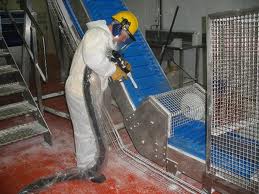 Almost every industrial organization has a method of industrial cleaning in place to clean and remove dirt, grime, grease, stains, rust, and all other harmful particles from parts, metals, materials, and many other types of industrial components before those products are put into service. Industrial cleaning is a very important method of the industrial design, build, and supply process because almost all industrial products must be completely cleaned of hazardous particles, otherwise a particular product might not function as intended or needed, rendering an entire operation ineffective, just because of one piece. Therefore, industrial businesses must be sure they have a reliable source of cleaning and degreasing service in place in order to prevent any such negative or preventive affectation from happening.
Industrial cleaning usually involves a chemical solution, or solvent, which is made up of a chemical compound in liquid form that can be applied to the industrial products for cleaning purposes. Once the chemical cleaning and degreasing agent is applied to the product, after time, it should be completely free from any and all inhibiting agents. Chemical solutions are usually designed by chemists and scientists who understand the emulsion process of compounds, and what can be derived or extracted when combining two chemical components. This process will elicit a liquid cleaning and degreasing solution that will clean industrial components.
However, certain methods of chemical cleaning, especially the process of creating liquid cleaning and degreasing solutions, have come under fire by certain organizations, such as the EPA and OSHA, concerning the safety of many of the chemicals that are in use or serve as a primary ingredient in the solvents. It is true that many chemical compounds can be hazardous to the environment, as well as to those who come into contact with them or even come in close proximity to the gases and vapors the chemicals emit. That is why companies like Ecolink are exercising due diligence into the chemical compounds that are used for industrial cleaning, and offering eco friendly, green alternative cleaning and degreasing solutions that are as effective for removing harmful particles from industrial products.
Ecolink understands how important industrial cleaning is to the entire process of industrial designing and building, which is why the company strives to keep industrial cleaning and degreasing solutions an integral part to the process, but instead use chemical solvents that are safe for people and for the environment. Ecolink has discovered several solvents still in use that are deemed unsafe. However, Ecolink provides industrial businesses alternative solutions to the solvent currently in use, and will help the industrial organization make a seamless transition to the eco friendly, green alternative.
Contact Ecolink to find out if your industrial cleaning solution is indeed safe for use. If not, Ecolink professionals will provide new and improved industrial cleaning solvents from which you can choose, and help you make an easy switch.