
What is an Industrial Aqueous Parts Cleaning Solvent?
When operating in the workshop of an industrial organization, several different kinds of labor are performed, which mostly involve the use of industrial components that include parts, metals, materials, chemical solutions, oils, gas, and many other products. Most often, an industrial organization will need to clean the workshop in order to rid the area of potential contaminants that could harm or negatively affect the next operation, the workers laboring in the workshop, or even the environment. This is why industrial parts cleaners are important to industrial businesses, as they rely on a strong and efficient cleaning mechanism or component to ensure the complete cleansing of a location. One of the reliable types of cleaning is called industrial aqueous parts cleaning. This blog is dedicated to explaining how this industrial parts cleaning option functions.
When the cleaning needs to be done on site, many industrial businesses will employ the use of an aqueous industrial parts cleaner. Aqueous and semi-aqueous agents incorporate the emulsion of solvents and water – a cleaning solution – that effectively cleans a 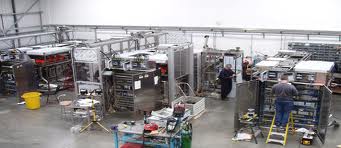 workstation. Aqueous cleaners are usually a combination of various substances, including alkaline builders, surfactants, sequestering agents, and other amalgamations. As it pertains to ferrous metal cleaning, rust inhibitors are built into the aqueous cleaner to prevent “flash rusting” after washing. The use of aqueous industrial parts cleaners are on the rise as its results have proven, in most cases, to be as effective or even better than hydrocarbon cleaners. In addition, the waste generated from using aqueous industrial parts cleaners are less hazardous, subsequently resulting in less costly disposal.
Aqueous industrial parts cleaners have advantages pertaining to particle and polar contaminants, and the cleaning solution only requires higher inputs of mechanical and thermal energy to be effective. Whereas, certain other solvents more easily remove oils and greases, but have health and environmental risks. In addition, most other industrial parts cleaning solvents are flammable, and consequently lead to a higher chance of fire and explosive hazards. Today, with the proper industrial parts washer equipment, it is generally accepted that aqueous industrial parts cleaners remove oil and grease as easily as solvents.
 The above information is only the tip of the iceberg concerning what industrial companies need to know about aqueous industrial parts cleaners. It is highly recommended that you conduct your own research, and contact an authority on the topic, such as Ecolink. Ecolink has been working with industrial organizations to find the most efficient industrial parts cleaning solutions that are also eco friendly and provide a green alternative to harmful chemicals found in older parts cleaning solvents. An Ecolink representative will be happy to provide further information on aqueous industrial parts cleaners, and help examine whether this is the right industrial parts cleaning solution for your business.