
Ecolink, Inc.
Q
  1. Home
  2. Ecolink News
  3. Exploring Types of Water Cooling Systems  

Exploring Types of Water Cooling Systems  

Ecolink Green Icon
Ecolink Blue And Green Icon

Water cooling systems are a great addition to any manufacturing processes prone to producing excess amounts of heat. However, these processes often are unable to continue working efficiently if there is too much excess heat. This is why various systems are used to control the excess heat. In this blog, we will explain these various systems and what they can provide. 

What are the different types?  

There are six basic types of these systems: 

  • Liquid-to-Liquid  
  • Closed-Loop Dry System  
  • Closed-Loop Dry System with Trim Cooling  
  • Open-Loop Evaporative System  
  • Closed-Loop Evaporative System  
  • Chilled Water System  

Liquid-to-Liquid Cooling System  

The basic setup for this type of system would involve an intermediate heat exchanger. Water would be on one side and another coolant in a closed loop on the other side.  

The system comes with the following benefits:  

  • Inexpensive to maintain   
  • Easy to maintain.  
  • Can be applied in exterior/interior spaces  

And comes with the drawbacks of downtime for cleaning and requiring a certain amount of coolant to operate properly.   

Closed-Loop Dry System  

This type of system uses an air-cooled fluid cooler. The heat is transferred from a closed loop filled with water and pumped through rows of finned tubes. 

This system possesses these benefits:  

  • Simple to install  
  • Low energy requirements  
  • Low maintenance  

This system also possesses these drawbacks:  

  • Certain climate conditions   
  • Windspeed  
  • Limited location  

Closed-Loop Dry System with Trim Cooling  

The design of this system, although very similar to the previous one, contains an additional supplemental fluid cooler.   

This design comes with the benefits of low cooling temperatures and small usage during colder months. 

However, it contains the drawbacks of the system above.  

Open-Loop Evaporative System  

This system draws water through a honeycomb structure of PVC placed within a tower structure. The water inside the tower is evaporated and pumped back through the tower.   

This design comes with the benefit of being inexpensive and simple to use in warmer climates  

However, it does require extensive water treatment and possesses control issues in cooler weather  

Closed-Loop Evaporative System  

This system is a hybrid between an open tower such as the one prior and a closed-loop heat exchanger. The cooling water stays outside of the tower during the process.  

Its benefits are minimal contamination and fewer water treatments.  

While its drawbacks include different maintenance for each side and additional mechanisms.  

Chilled Water System  

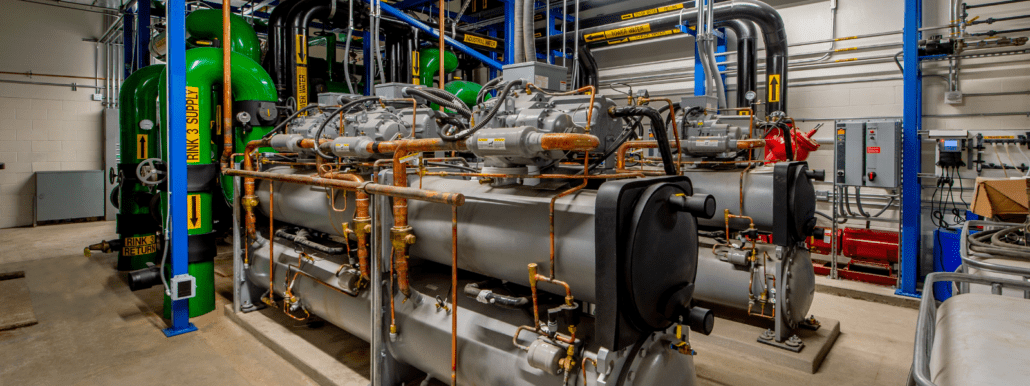
This system employs a compressor and a condenser to force cooling water through an evaporator, causing the process to cool down.   

And comes with the benefit of being independent of the outside temperature.  

However, its drawbacks include:   

  • Complex design  
  • Abundant heat,   
  • Requiring more power  
  • Not cost efficient   

In need of more information about water cooling systems?  

Then look no further than Ecolink! Here we have been dedicated to supplying industries like yours with chemicals for over thirty years! We also provide helpful blogs like this one, to guide you through all things chemical! Reach out to us today, we are here to help your industry thrive! 

Search here

Don’t forget to share this post!

Categories

Suggested Blog Posts

View all News
By Mark
Ensuring Safety: The Importance of PPE for Handling Chemicals
Jul 24 2026

Ensuring Safety: The Importance of PPE for Handling Chemicals

Chemical-related workplace injuries remain a persistent and costly problem across manufacturing, construction, and industrial maintenance sectors. When it comes to...
By Mark
Essential Factors to Evaluate When Selecting Boiler Water Treatment Chemicals
Jul 20 2026

Essential Factors to Evaluate When Selecting Boiler Water Treatment Chemicals

Selecting the right boiler water treatment chemicals is one of the most consequential decisions you can make for the longevity, safety, and efficiency of your boiler...
By Mark
Common Causes of Foaming in Industrial Water and Effective Control Methods
Jul 17 2026

Common Causes of Foaming in Industrial Water and Effective Control Methods

Excessive foam in industrial water systems disrupts operations, reduces treatment efficiency, causes overflow events, and creates worker safety hazards that cost...
By Mark
Key Benefits of Using an Aerosol Degreaser for Electronics
Jul 13 2026

Key Benefits of Using an Aerosol Degreaser for Electronics

Grease, flux residue, dust, and moisture accumulation on circuit boards and electrical contacts are among the leading causes of premature equipment failure in...
By Mark
What Is a Flux Remover: Benefits, Usage, and Appropriate Selection Guide
Jul 10 2026

What Is a Flux Remover: Benefits, Usage, and Appropriate Selection Guide

Flux residues left on printed circuit boards after soldering are one of the leading causes of premature electrical failures in electronics manufacturing. These...
By Mark
How Do Water-Based Cleaners Remove Grease from Industrial Metal Parts Safely
Jul 10 2026

How Do Water-Based Cleaners Remove Grease from Industrial Metal Parts Safely

Water-based cleaners remove grease from industrial metal parts safely by using surfactants, pH builders, emulsifiers, corrosion inhibitors, heat, and agitation to...
By Khatera Barati
Khatera Barati - Digital Marketing Content Intern
Jul 07 2026

From WordPress to SEO: My Ecolink Marketing Internship

Reflecting on My Marketing Internship at Ecolink As my internship with Ecolink comes to an end, I’ve had the opportunity to reflect on how much I’ve learned over the...
By Mark
Why Industrial Lubricants Are the Backbone of Modern Machinery
Jul 06 2026

Why Industrial Lubricants Are the Backbone of Modern Machinery

Improper lubrication causes 64% of bearing failures, making it the single greatest preventable cause of machinery breakdown across every industrial sector. That...
By Mark
What Is an Epoxy Paint Stripper and What Are Its Uses?
Jun 29 2026

What Is an Epoxy Paint Stripper and What Are Its Uses?

An epoxy paint stripper is a heavy-duty chemical solution used to soften, swell, and remove cured epoxy paint from surfaces where standard paint removers are...
By Mark
How Boiler Water Treatment Chemicals Prevent System Corrosion
Jun 25 2026

How Boiler Water Treatment Chemicals Prevent System Corrosion

Boiler water treatment chemicals prevent system corrosion by controlling the conditions that allow metal attack: dissolved oxygen, carbon dioxide, low pH, hardness...
View all News