
1. Home
  2. Solvents
  3. Safe Handling of Toluene

Safe Handling of Toluene
Last updated:

[av_image src=’https://ecolink.com/wp-content/uploads/2018/08/TOLUENE-1-300×169.jpg’ attachment=’12792′ attachment_size=’medium’ align=’center’ styling=” hover=” link=” target=” caption=” font_size=” appearance=” overlay_opacity=’0.4′ overlay_color=’#000000′ overlay_text_color=’#ffffff’ copyright=” animation=’no-animation’ av_uid=’av-jkimlqw7′ admin_preview_bg=”][/av_image]

[av_textblock size=” font_color=” color=” av-medium-font-size=” av-small-font-size=” av-mini-font-size=” av_uid=’av-jkimdo7i’ admin_preview_bg=”]

What is Toluene?

Toluene is a colorless aromatic hydrocarbon.  Toluene occurs naturally at low levels in crude oil and as a byproduct in gasoline production and coke production from coal.  Toluene is closely related to benzene and has similar qualities. The smell of Toluene is usually associated with paint thinners due to it being a key solvent within it.  Toluene has several uses including use as a:

  • Industrial feedstock
  • Chemical reactant
  • Solvent in paint thinners
  • Solvent in contact cement
  • Solvent in model airplane glue, and a
  • Solvent in lacquers

Toluene is also used within consumer products such as nail polish removers, glues, synthetic fragrances, and correction fluids.

What are the health and environmental impacts of toulene?

Toluene is both a skin and eye irritant.  Inhalation of Toluene can cause confusion, memory loss, nausea, loss of appetite, hearing loss, and color vision loss.  Toluene is also flammable in the presence of flames, but not in the presence of electrical sparks. The EPA states that there is insufficient information regarding Toluene having a carcinogenic potential.  Toluene is also currently listed as a reproductive toxin.

How to Safely Handle Toluene

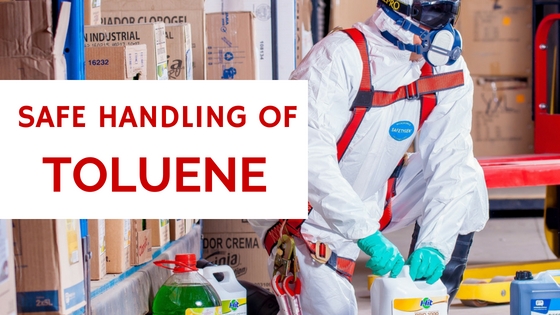
When handling Toluene, it is pertinent to have proper ventilation in the facility it is being handled within.  An example of ideal ventilation is having spray booths within the facility to decrease the spread of toluene vapors.  Another essential item while handling toluene is to wear proper gloves, either neoprene or nitrile gloves are ideal. When handling Toluene, there should be no local ignition source due to the toluene vapors being explosive.

To reduce exposure, some tips include to switch from substituting brush and roller applications for spray application.  An ideal choice to reduce exposure when cleaning and degreasing is to switch over to a water-based solvent rather than continue using toluene.  

Safer Alternatives to Toluene

Methyl soyate is a safer alternative to Toluene.  Methyl Soyate, also known as soy methyl ester, is a soybean oil derivative that has the ability to replace Toluene in several applications.  A few of these applications include:

  • Adhesives
  • Paint strippers
  • Coatings.

Other advantages of switching to Methyl Soyate is its environmental and health impacts.  Methyl soyate is both biodegradable and renewable; it is also low in VOCs. Methyl Soyate also is nontoxic and there are no known health risks on humans.  To learn more about the overall benefits of Methyl Soyate, please check out our post, Benefits of Methyl Soyate.

For more information regarding safer handling of Toluene and safer alternatives for when you are ready to make the switch, please email us at info@ecolink.com, or call us at (800)563-1305.
[/av_textblock]

Search here

Don’t forget to share this post!

Categories

Suggested Blog Posts

View all News
By Mark
What Is a Flux Remover: Benefits, Usage, and Appropriate Selection Guide
Jul 13 2026

What Is a Flux Remover: Benefits, Usage, and Appropriate Selection Guide

Flux residues left on printed circuit boards after soldering are one of the leading causes of premature electrical failures in electronics manufacturing. These...
By Mark
How Do Water-Based Cleaners Remove Grease from Industrial Metal Parts Safely
Jul 10 2026

How Do Water-Based Cleaners Remove Grease from Industrial Metal Parts Safely

Water-based cleaners remove grease from industrial metal parts safely by using surfactants, pH builders, emulsifiers, corrosion inhibitors, heat, and agitation to...
By Khatera Barati
Khatera Barati - Digital Marketing Content Intern
Jul 07 2026

From WordPress to SEO: My Ecolink Marketing Internship

Reflecting on My Marketing Internship at Ecolink As my internship with Ecolink comes to an end, I’ve had the opportunity to reflect on how much I’ve learned over the...
By Mark
Why Industrial Lubricants Are the Backbone of Modern Machinery
Jul 06 2026

Why Industrial Lubricants Are the Backbone of Modern Machinery

Improper lubrication causes 64% of bearing failures, making it the single greatest preventable cause of machinery breakdown across every industrial sector. That...
By Mark
What Is an Epoxy Paint Stripper and What Are Its Uses?
Jun 29 2026

What Is an Epoxy Paint Stripper and What Are Its Uses?

An epoxy paint stripper is a heavy-duty chemical solution used to soften, swell, and remove cured epoxy paint from surfaces where standard paint removers are...
By Mark
How Boiler Water Treatment Chemicals Prevent System Corrosion
Jun 25 2026

How Boiler Water Treatment Chemicals Prevent System Corrosion

Boiler water treatment chemicals prevent system corrosion by controlling the conditions that allow metal attack: dissolved oxygen, carbon dioxide, low pH, hardness...
By Mark
Types of Water Treatment Chemicals
Jun 22 2026

Types of Water Treatment Chemicals

Choosing the right water treatment chemicals starts with knowing what the water contains, what the system needs to protect, and what regulations apply. The main types...
By Mark
Industrial Lubricants: Types, Uses, and How They Work
Jun 19 2026

Industrial Lubricants: Types, Uses, and How They Work

Industrial lubricants reduce friction, control heat, protect parts, and help industrial machinery run reliably under demanding operating conditions. If you need to...
By Mark
Industrial Degreaser: How to Keep Machinery Clean and Performing Efficiently
Jun 15 2026

Industrial Degreaser: How to Keep Machinery Clean and Performing Efficiently

Contaminated machinery runs hotter, wears faster, wastes energy, and fails sooner. The right industrial degreaser removes grease, oil, grime, carbon deposits, and...
By Tomas Fernandez
Image of Latin America Region "LATAM Chemical Trends 2026"
Apr 16 2026

Latin America Chemical Trends 2026

A Strait 29 Nautical Miles Wide Is Reshaping Chemical Supply Chains Across Latin America. Here's What You Need to Know The Strait of Hormuz doesn't appear on most...
View all News