
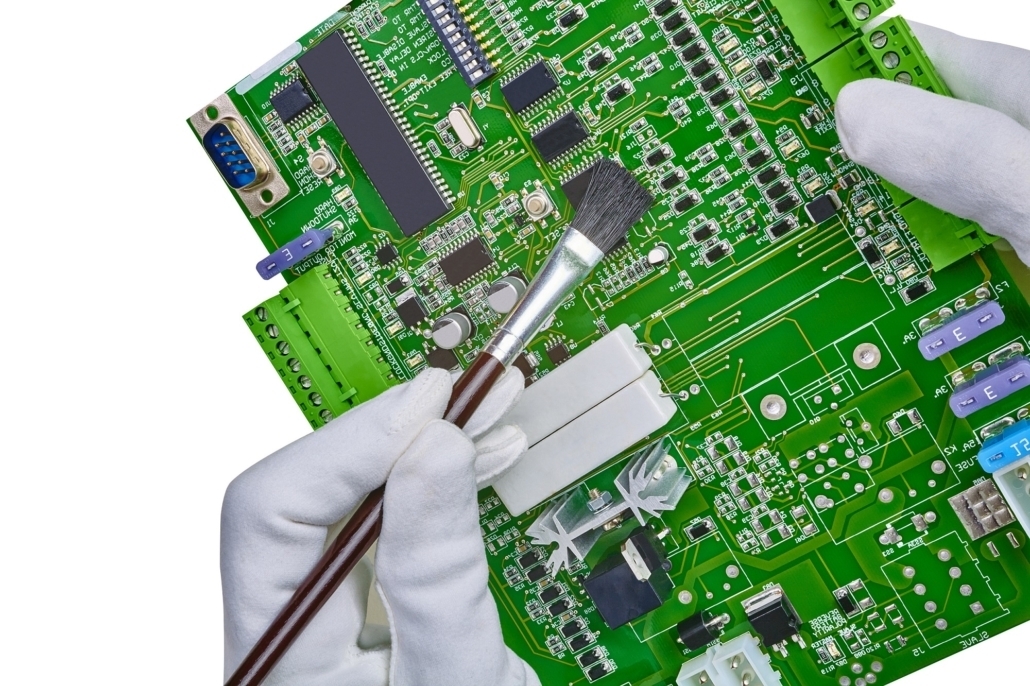
Electronic Solvent Cleaner: Finding Environmentally Safe Alternatives
A dependable cleaner is essential in the electronics industry to remove contaminants such as flux, adhesive residues, solder, and general debris left behind from the manufacturing process. Electronic solvent cleaners are used to increase the lifetime of the product by boosting surface resistance as well as other properties. As new products consistently decrease in size, manufacturers must take all necessary steps to deliver high performance and reliability.
An exceptional electronic solvent cleaner ensures adequate adhesion for coatings in addition to insulation resistance. Cleaning is necessary throughout the manufacturing process to ensure each electronic component is high quality. For example, removal is often required prior to soldering to eliminate contaminants from previous production phases. Awareness has drastically increased regarding how electronic solvent cleaners affect the environment thus causing several companies in this industry to seek safer, environmentally friendly options.
What Makes an Electronic Solvent Cleaner Safer for the Environment?
Traditional electronic solvent cleaners contain extensive Volatile Organic Compounds or VOC’s, which contribute to ozone depletion and create health concerns for handlers or anyone working around the chemicals. Safer alternatives are being developed to deliver the equivalent results with a lower risk. A number of qualities make a chemical safer for the environment including:
- Minimal VOC’s
- Rapid Drying
- Non-Flammable
- Minimal Ozone Depletion
- Little to No Odor
Trichloroethane or TCA was the most common solvent choice for electronic cleaning and maintenance tasks; however, it was banned due to its negative impact on the environment. Chlorofluorocarbon (CFC) was another popular chemical solvent that many companies are seeking to replace because it is harmful to the environment. Finding an exact replacement is not easily done for these chemicals and requires a little work. Many providers have developed solutions with safer qualities that are suitable as an alternative.
A Few Key Considerations
Many replacement options offer solutions containing minimal to no VOC’s. This ensures minimal harm as substances enter the atmosphere through evaporation or manufacturing processes. Additionally non-flammable, rapid drying solutions offer a reduced risk of evaporation. The faster the substance dries, the less time it has to evaporate. Non-flammable electronic solvent cleaners have either no flash point or a flash point higher than 38 degrees Celsius (100 degrees Fahrenheit).
Electronic solvent cleaners with a low flash point are considered flammable and dangerous for the environment. This risk increases when the flash point is lower because it vaporizes at a lower temperature. Electronic solvent cleaners with no flash point simply do not vaporize at any temperature. The boiling point specifically determines the temperature at which the liquid will turn to gas. Those with a low boiling point are considered to be a fire hazard because they produce extensive amounts of vapor at low temperatures.
Electronic solvent cleaners with higher vapor pressures are more volatile and considered to be dangerous. Other factors to evaluate when selecting environmentally friendly electronic solvent cleaners are: vapor density, surface tension, hazardous air pollutants (HAP’s), and threshold limit values. At Ecolink, we offer a number of environmentally friendly, effective options to aid in cleaning. We can also formulate a safe to handle, non-ozone depleting solution to meet your unique needs. Contact us today to learn more!

