1. Home
  2. Ecolink News
  3. How to Clean Mold off Asphalt Shingles   

How to Clean Mold off Asphalt Shingles   

Cleaning mold off asphalt shingles doesn’t have to be a difficult process. Read on to learn about the methods and types of cleaning that’ll help your shingles look spotless. 

The Importance of Cleaning Asphalt Shingles  

Mold thrives in any area that contains moisture, and when mixed with debris buildup, can be unsightly and cause damage to your roof. Exterior damage to your roof can lead to interior damage to your home such as water leaks, pests, and more. 

Even if you’ve neglected cleaning your roof, it may not be too late to improve its condition with a regular washing routine—a better alternative to replacing costly shingles and entire roofing if damage were to occur. 

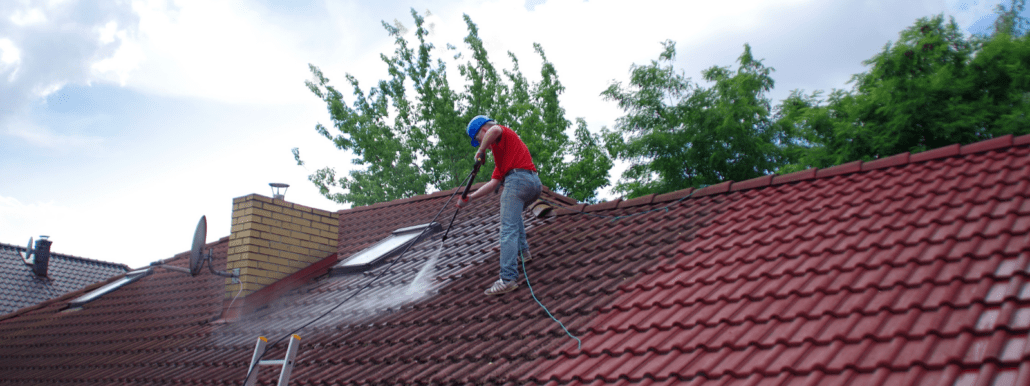
When it comes to cleaning shingles, the best cleaning method involves the use of a pressure washer. There are a variety of solutions that can be used in the pressure washing process, some solutions are eco-friendly, while others rely on harsher chemicals such as bleach. 

Do I Need Chemicals When Cleaning Asphalt Shingles? 

Yes, chemicals are an essential part of the roof washing process. While we may often associate the word “chemicals” with toxic substances, not all chemicals are harmful and when used responsibly, can clean effectively without harming the environment. 

For example, bleach solutions contain small amounts of bleach that are great for removing dirt and grime from surfaces. When diluted and combined with other non-toxic solutions, bleach poses little risk to the handler and the surrounding environment if handled properly. 

Once you find an eco-friendly roof cleaning solution, you’ll want to use it with your pressure washer to start cleaning the shingles. During this process, you’ll want to make sure you’re wearing the proper protective equipment such as: 

  • Gloves 
  • Mask 
  • Glasses/goggles 
  • Suitable clothing 
  • & other protective gear 

Depending on the solution that you choose to use, some methods require that solutions be left on the surface for longer than others, affecting the overall length of the process, while some solutions can be rinsed off immediately. Either way, several pass-throughs may be needed if there is excessive mold on the shingles. 

Some chemicals that may be used to clean shingles are sodium hypochlorite, hydrogen peroxide, bleach, etc. There are even enhancers depending on what routes are taken to clean shingles!  

Need an Eco-Friendly Solution?  

Tidal Washers is invested in finding ways to use eco-friendly products that involve fewer chemicals. We for the best solutions that meet your industrial application needs. Looking into pressure washing chemicals and not sure where to begin? We offer products that will enhance your solutions! 

Get in contact with one of our chemical experts today! We look forward to assisting you. 

Search here

Don’t forget to share this post!

Categories

Suggested Blog Posts

View all News
By Mark
Common Causes of Foaming in Industrial Water and Effective Control Methods
Jul 17 2026

Common Causes of Foaming in Industrial Water and Effective Control Methods

Excessive foam in industrial water systems disrupts operations, reduces treatment efficiency, causes overflow events, and creates worker safety hazards that cost...
By Mark
Key Benefits of Using an Aerosol Degreaser for Electronics
Jul 13 2026

Key Benefits of Using an Aerosol Degreaser for Electronics

Grease, flux residue, dust, and moisture accumulation on circuit boards and electrical contacts are among the leading causes of premature equipment failure in...
By Mark
What Is a Flux Remover: Benefits, Usage, and Appropriate Selection Guide
Jul 10 2026

What Is a Flux Remover: Benefits, Usage, and Appropriate Selection Guide

Flux residues left on printed circuit boards after soldering are one of the leading causes of premature electrical failures in electronics manufacturing. These...
By Mark
How Do Water-Based Cleaners Remove Grease from Industrial Metal Parts Safely
Jul 10 2026

How Do Water-Based Cleaners Remove Grease from Industrial Metal Parts Safely

Water-based cleaners remove grease from industrial metal parts safely by using surfactants, pH builders, emulsifiers, corrosion inhibitors, heat, and agitation to...
By Khatera Barati
Khatera Barati - Digital Marketing Content Intern
Jul 07 2026

From WordPress to SEO: My Ecolink Marketing Internship

Reflecting on My Marketing Internship at Ecolink As my internship with Ecolink comes to an end, I’ve had the opportunity to reflect on how much I’ve learned over the...
By Mark
Why Industrial Lubricants Are the Backbone of Modern Machinery
Jul 06 2026

Why Industrial Lubricants Are the Backbone of Modern Machinery

Improper lubrication causes 64% of bearing failures, making it the single greatest preventable cause of machinery breakdown across every industrial sector. That...
By Mark
What Is an Epoxy Paint Stripper and What Are Its Uses?
Jun 29 2026

What Is an Epoxy Paint Stripper and What Are Its Uses?

An epoxy paint stripper is a heavy-duty chemical solution used to soften, swell, and remove cured epoxy paint from surfaces where standard paint removers are...
By Mark
How Boiler Water Treatment Chemicals Prevent System Corrosion
Jun 25 2026

How Boiler Water Treatment Chemicals Prevent System Corrosion

Boiler water treatment chemicals prevent system corrosion by controlling the conditions that allow metal attack: dissolved oxygen, carbon dioxide, low pH, hardness...
By Mark
Types of Water Treatment Chemicals
Jun 22 2026

Types of Water Treatment Chemicals

Choosing the right water treatment chemicals starts with knowing what the water contains, what the system needs to protect, and what regulations apply. The main types...
By Mark
Industrial Lubricants: Types, Uses, and How They Work
Jun 19 2026

Industrial Lubricants: Types, Uses, and How They Work

Industrial lubricants reduce friction, control heat, protect parts, and help industrial machinery run reliably under demanding operating conditions. If you need to...
View all News