
What is the Best way for Companies to Reduce Toxic Chemical Usage?
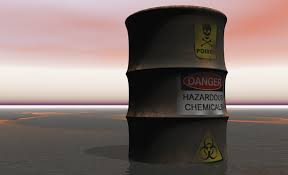 The answer to this question is not as straightforward as you might think, and that is because the solution is dependent on a host of factors. The factors aiding in the quest for the overall solution are as follows:
As much as companies like Ecolink work toward finding the solution that provides the ultimate safe cleaning solvent, the truth is that there are no perfect substitutes in any attempt to eliminate completely hazardous solvents at home or in the workplace. If the ultimate safe solution actually existed, the professionals at Ecolink would like to think that, everyone, whether at home or in the professional setting, would be using that particular solvent. Every cleaning solvent carries a matrix of risk factors for environmental, health, and / or safety reasons. Inevitably, any chemical choice involves weighing the alternatives, or the pros and cons between each chemical cleaning product.
Ecolink places every product within a “hazard ladder,” to assist in the selection process for a particular cleaning application. While this hierarchy is both technical and subjective, it provides a sound foundation for evaluating alternative chemical cleaners for each specific application. Keep in mind that the circumstances of your specific chemical application pertaining to your cleaning need will override any set of assumptions you might have. The hierarchy listed below is relative to site-specific influences and benefits related to a given chemical. The list is written in such a way that the levels of hazard increase from the top, moving down:
- Avoid the need to clean: As ridiculous as this might seem, you and/or your business can identify ways to prevent the part that needs cleaning from becoming dirty in the first place. Once you identify these possibilities, be sure to evaluate and implement if they are deemed advantageous to keeping your parts cleaned.
- Modify the part for containment: This can be accomplished through the use of no-clean flux, water based cutting fluids, and non solvent based cleaning technology.
- Use high pressure water, or water based cleaners: For certain products, though several parts, items, and materials fall under this category for effective cleaning, you will be surprised how effective high pressure water cleaning can be. Use non halogenated, non flammable solvent technology.
- Use terpene, aliphatic hydrocarbon, and dibasic esters: This is not optimal, because it requires the use of flammable solvent technology, but it is still better and safer than many other options.
- Use alcohol and / or acetone: Also not optimal, but they are not ozone depleting, and they are considered a low toxicity halogenated solvents.
- Use HFE and HFC blends: Not as recommended as number five, but still safer than many other cleaning solvents, both HFE and HFC are non ozone depleting halogenated solvents.
- Use N-Propyl Bromide and/or TCE: A last resort based on this list, but similar to number six, it is still a better alternative than several other types of chemical cleaning solutions.