
Ecolink, Inc.
Q
  1. Home
  2. Safer Chemicals
  3. Safety Recommendations for Solvent Based Cleaners

Safety Recommendations for Solvent Based Cleaners

Last updated:

Solvent based cleaners are solutions whose base is primarily comprised of chemicals, which are largely responsible for delivering the cleaning power of the solutions. Some solvent based cleaners are safer for humans and the environment than others. However, even when a solvent cleaner is considered safer to use than some of its toxic counterparts, in order to be considered truly safe for use, it must often be administered within the context of the safety measures below.

Special Ventilation System

Solvents that emit airborne particles that could cause respiratory distress, upset stomach, dizziness, or other troublesome, acute health conditions should be administered in an environment with a special ventilation system that is designed to efficiently pull the particles from the air instead of letting them hang around and precipitate acute health problems.

Tightly Sealed Cleaner Containers

When solvent based cleaners are not in use, they can still emit vapors that cause acute health issues such as the ones mentioned above, though usually not with the same intensity as open containers from which liquid is dispensed. Tightly sealed containers also help preserve solvent that has a high evaporation rate, as well as prevent accidental spills in the work environment

Personal Protective Equipment

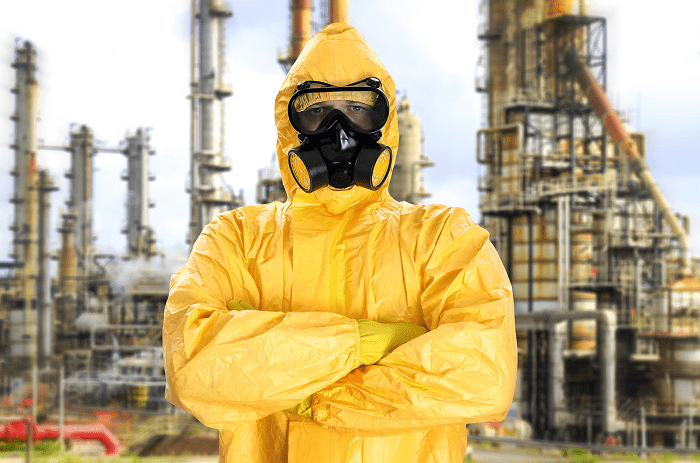
Personal Protective Equipment (PPE) is exactly what it sounds like: attire that workers wear to prevent exposure to conditions in the work environment that could cause serious harm, including powerful chemicals that could create a wide array of acute and chronic health conditions. For help selecting PPE, consult this “Selecting PPE” resource from OSHA.

Elimination of Ignition Sources

From open flames in metallurgical heat treating environments to sparks in work areas where welding is performed, there are numerous types of ignition sources that could potentially ignite solvent based cleaners that have a medium to low flash point. When these types of cleaners must be applied, ignition sources should be eliminated before the solvents are administered.

Chemical Waste Disposal System

When solvent based cleaners contain ingredients that could negatively impact workers and the environment, they should be administered in work areas that contain a chemical waste disposal systems that quickly secure the ingredients and store them under safe conditions until in-house or third party waste disposal specialists can safely remove them from the waste trap.

Need Safer Solvent Based Cleaners?

In terms of safety, solvent based cleaners range from being highly toxic to humans and the environment to having a commendable safety profile regarding these considerations. Ecolink specializes in supplying the latter type of solvent cleaners. Whether your organization uses a solvent cleaner whose ingredients the EPA is scheduled to regulate, or you simply want a safer cleaner for the sake of your workers and the environment, we can provide the right solution.

Call us today at (800) 563-1305 for assistance determining whether one of our readymade cleaners or a custom cleaning solution is the best option for your needs. Let us provide you with a safer solution that benefits the health of your workers and helps to protect the environment!

Search here

Don’t forget to share this post!

Categories

Suggested Blog Posts

View all News
By Mark
Common Causes of Foaming in Industrial Water and Effective Control Methods
Jul 17 2026

Common Causes of Foaming in Industrial Water and Effective Control Methods

Excessive foam in industrial water systems disrupts operations, reduces treatment efficiency, causes overflow events, and creates worker safety hazards that cost...
By Mark
Key Benefits of Using an Aerosol Degreaser for Electronics
Jul 13 2026

Key Benefits of Using an Aerosol Degreaser for Electronics

Grease, flux residue, dust, and moisture accumulation on circuit boards and electrical contacts are among the leading causes of premature equipment failure in...
By Mark
What Is a Flux Remover: Benefits, Usage, and Appropriate Selection Guide
Jul 10 2026

What Is a Flux Remover: Benefits, Usage, and Appropriate Selection Guide

Flux residues left on printed circuit boards after soldering are one of the leading causes of premature electrical failures in electronics manufacturing. These...
By Mark
How Do Water-Based Cleaners Remove Grease from Industrial Metal Parts Safely
Jul 10 2026

How Do Water-Based Cleaners Remove Grease from Industrial Metal Parts Safely

Water-based cleaners remove grease from industrial metal parts safely by using surfactants, pH builders, emulsifiers, corrosion inhibitors, heat, and agitation to...
By Khatera Barati
Khatera Barati - Digital Marketing Content Intern
Jul 07 2026

From WordPress to SEO: My Ecolink Marketing Internship

Reflecting on My Marketing Internship at Ecolink As my internship with Ecolink comes to an end, I’ve had the opportunity to reflect on how much I’ve learned over the...
By Mark
Why Industrial Lubricants Are the Backbone of Modern Machinery
Jul 06 2026

Why Industrial Lubricants Are the Backbone of Modern Machinery

Improper lubrication causes 64% of bearing failures, making it the single greatest preventable cause of machinery breakdown across every industrial sector. That...
By Mark
What Is an Epoxy Paint Stripper and What Are Its Uses?
Jun 29 2026

What Is an Epoxy Paint Stripper and What Are Its Uses?

An epoxy paint stripper is a heavy-duty chemical solution used to soften, swell, and remove cured epoxy paint from surfaces where standard paint removers are...
By Mark
How Boiler Water Treatment Chemicals Prevent System Corrosion
Jun 25 2026

How Boiler Water Treatment Chemicals Prevent System Corrosion

Boiler water treatment chemicals prevent system corrosion by controlling the conditions that allow metal attack: dissolved oxygen, carbon dioxide, low pH, hardness...
By Mark
Types of Water Treatment Chemicals
Jun 22 2026

Types of Water Treatment Chemicals

Choosing the right water treatment chemicals starts with knowing what the water contains, what the system needs to protect, and what regulations apply. The main types...
By Mark
Industrial Lubricants: Types, Uses, and How They Work
Jun 19 2026

Industrial Lubricants: Types, Uses, and How They Work

Industrial lubricants reduce friction, control heat, protect parts, and help industrial machinery run reliably under demanding operating conditions. If you need to...
View all News