
1. Home
  2. Ecolink News
  3. Best Cleaning Solution for Asphalt Shingles  

Best Cleaning Solution for Asphalt Shingles  

Last updated:

Asphalt shingles are relatively common in the United States as they are affordable and efficient. Made from a mixture of asphalt, granules, sealants, fiberglass, and release film, these types of shingles are lightweight, waterproof, and fireproof. 

However, asphalt shingles aren’t invincible. In order to prolong the lifespan of your shingles, it’s essential that you clean your roof regularly. In this blog post, we’ll take a look at why it’s important to clean your roof, and an at-home method you can try to get your roof looking spotless. 

Importance of Roof Maintenance 

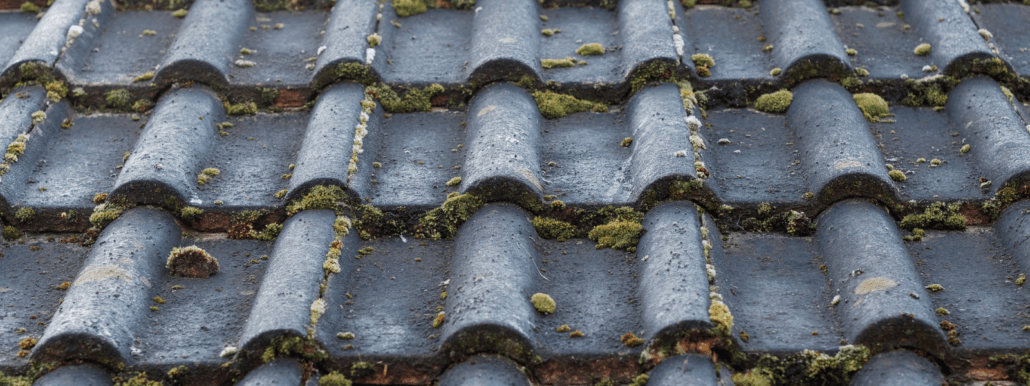
Moss is a plant that spreads via spores carried in the wind, landing on your roof and thriving on the surface. While moss may seem harmless, it actually is quite dangerous to your roof, and when left on your shingles for too long, can cause serious issues. 

Moss can ruin shingles by causing them to curl or lift at the edges. Once shingles are loosened, they can blow off in the wind and need replacement. In addition, no shingles on your roof means that your roof loses the waterproofing element, potentially leading to leaks if the shingle is not replaced.     

Cleaning Your Asphalt Shingles 

So, how do you clean your asphalt shingles?  

The answer lies in an equal part mixture of water and chlorine bleach, and a garden hose. Using a 50:50 chlorine bleach/water mixture allows for the bleach to kill the moss and other potentially harmful bugs residing on the shingles, while the water keeps the bleach from being too potent and damaging the integrity of the shingles themselves (not to mention the live plants below your house).    

To clean your shingles, follow these easy steps: 

  1. Take the 50:50 water/bleach mixture in a sprayer and attach it to a garden hose. 
  2. Spray the roof with the mixture and allow it to sit for 15-20 minutes.
  3. Rinse the mixture off with just water. Never use a high-pressurized blast from a power or pressure washer unless you are a professional. Too high of a blast can harm your shingles rather than help them.

Sometimes moss is stubborn and doesn’t entirely go away after just one wash. If this is the case, then repeat the above process at least 2 to 3 times. 

To prevent future dirtying of your asphalt roof, trim nearby tree branches, leaf blow the roof often, and keep the gutters clean. 

Looking for the Best Cleaning Solution for Asphalt Shingles? 

If you’re in the shingle cleaning business, then you’ll need an industrial-grade roof-cleaning solution. At Ecolink, we offer high-quality cleaning solutions available to buy in bulk through our brand Tidal Washers!  

Reach out to us today to learn more about how our solutions can help you achieve your business goals! 

Search here

Don’t forget to share this post!

Categories

Suggested Blog Posts

View all News
By Khatera Barati
Khatera Barati - Digital Marketing Content Intern
Jul 07 2026

From WordPress to SEO: My Ecolink Marketing Internship

Reflecting on My Marketing Internship at Ecolink As my internship with Ecolink comes to an end, I’ve had the opportunity to reflect on how much I’ve learned over the...
By Mark
What Is an Epoxy Paint Stripper and What Are Its Uses?
Jun 29 2026

What Is an Epoxy Paint Stripper and What Are Its Uses?

An epoxy paint stripper is a heavy-duty chemical solution used to soften, swell, and remove cured epoxy paint from surfaces where standard paint removers are...
By Mark
How Boiler Water Treatment Chemicals Prevent System Corrosion
Jun 25 2026

How Boiler Water Treatment Chemicals Prevent System Corrosion

Boiler water treatment chemicals prevent system corrosion by controlling the conditions that allow metal attack: dissolved oxygen, carbon dioxide, low pH, hardness...
By Mark
Types of Water Treatment Chemicals
Jun 22 2026

Types of Water Treatment Chemicals

Choosing the right water treatment chemicals starts with knowing what the water contains, what the system needs to protect, and what regulations apply. The main types...
By Mark
Industrial Lubricants: Types, Uses, and How They Work
Jun 19 2026

Industrial Lubricants: Types, Uses, and How They Work

Industrial lubricants reduce friction, control heat, protect parts, and help industrial machinery run reliably under demanding operating conditions. If you need to...
By Mark
Industrial Degreaser: How to Keep Machinery Clean and Performing Efficiently
Jun 15 2026

Industrial Degreaser: How to Keep Machinery Clean and Performing Efficiently

Contaminated machinery runs hotter, wears faster, wastes energy, and fails sooner. The right industrial degreaser removes grease, oil, grime, carbon deposits, and...
By Mark
How Do Water-Based Cleaners Remove Grease from Industrial Metal Parts Safely
Jun 12 2026

How Do Water-Based Cleaners Remove Grease from Industrial Metal Parts Safely

Water-based cleaners remove grease from industrial metal parts safely by using surfactants, pH builders, emulsifiers, corrosion inhibitors, heat, and agitation to...
By Tomas Fernandez
Image of Latin America Region "LATAM Chemical Trends 2026"
Apr 16 2026

Latin America Chemical Trends 2026

A Strait 29 Nautical Miles Wide Is Reshaping Chemical Supply Chains Across Latin America. Here's What You Need to Know The Strait of Hormuz doesn't appear on most...
By Sydney Manns
Find HPLC-Grade Acetonitrile with Ecolink today! Availbale in 4x1, 5 gallon and 55 gallon options!
Mar 20 2026

Benefits of Acetonitrile HPLC Grade for Your Laboratory Needs

HPLC-grade Acetonitrile is one of the most widely used high-purity solvents in analytical chemistry, pharmaceuticals, environmental testing, and food safety.  Its...
By Khatera Barati
Acetone VS Paint Thinner for Cleaning, purchase from Ecolink today!
Jan 13 2026

Acetone vs. Paint Thinner for Cleaning: Which One Works Better and Why?

Acetone vs Paint Thinner for Cleaning  If you’re looking to purchase chemicals for your industrial cleaning application, it’s important to educate yourself on each...
View all News