
Ecolink, Inc.
Q
  1. Home
  2. Solvent Replacement Strategies
  3. Choosing a Replacement Solvent Based Degreaser: Four Considerations

Choosing a Replacement Solvent Based Degreaser: Four Considerations

Last updated:

A solvent base cleaner is a cleaning agent that uses a chemical base to achieve efficacy, as opposed to water based cleaners, which predominantly uses a base of water to perform cleaning. However, as effective as a water based cleaners can be, they are often insufficient for a certain cleaning operations. If you need to choose a replacement, solvent-based degreaser, making the following, crucial considerations can help you select the right product for your needs.

1. List of Reportable Chemicals

Since 2015, nPB has been on the list of toxic chemicals subject to reporting under section 313 of the Emergency Planning and Community Right-to-Know Act (EPCRA) of 1986 and section 6607 of the Pollution Prevention Act (PPA) of 1990. Many in the solvent industry see this legislation as preceding the inclusion of nPB n the EPA’s list of lists, which identifies chemicals that are demonstrated to produce airborne pollutants that harm human health.

However, chemicals don’t instantly appear one the EPA’s toxic inventory list. Rather, the EPA generally communicates upcoming chemical regulations to companies and organizations well ahead of time to give them the time to phase-out solvents such as nPB and identify safer solvents that offer better safety profile, while delivering just as much cleaning power.

2. Method of Degreaser Use

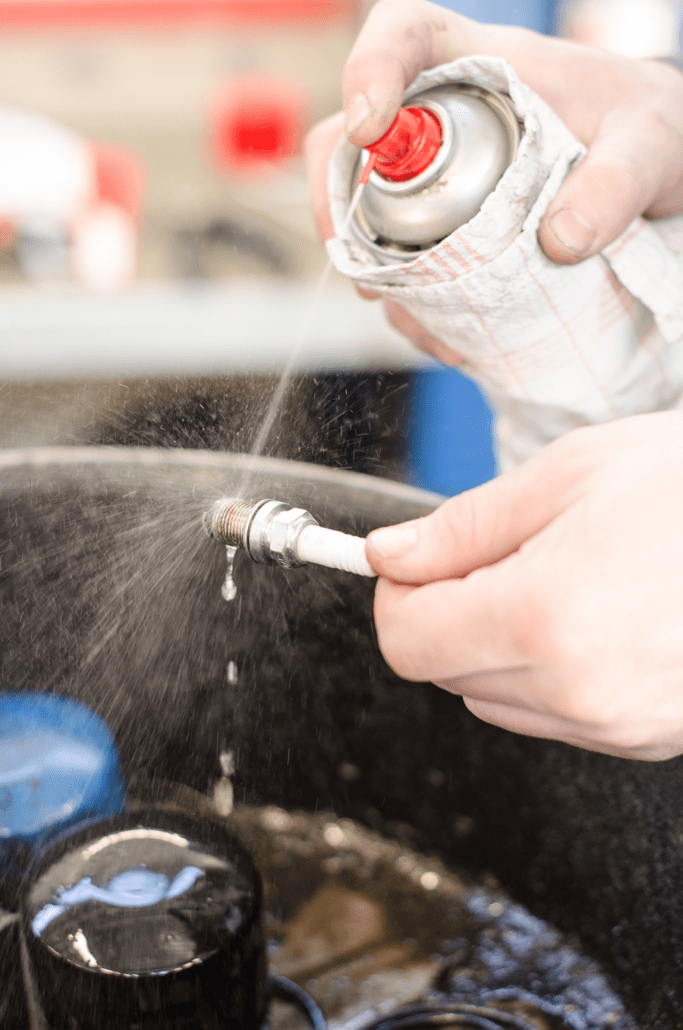
Will you wipe the degreaser on surfaces that need cleaning, or will you use a spray application to coat the surface? In the latter case, it’s often ideal to use a highly evaporative, dielectric cleaner in aerosol. Once parts are thoroughly sprayed, the grease and grime fall away from parts like water from a duck’s back. An order of aerosol containers may cost more than an order of wipe containers, but simplified cleaning can have a major impact on solvent expense.

3. Opportunity to Receive Custom Orders

Many replacement solvent based degreaser suppliers supply stock solutions that are formulated to cover a wide range of options. However, many companies and organizations need to upgrade the options that a solvent based degreaser offer. This is where working with a provider of custom cleaning solutions can help dramatically. The manufacturer can formulate solvent based degreaser that is specifically designed for your organization’s type of cleaning purposes.

4. Compatible With Parts Washing Systems

Last but certainly not least, if you use an industrial parts washing systems, as many large organizations do, it’s essential to identify a solvent that synchronizes with your parts washing system. Furthermore, when the system is used for vapor degreasing, a solvent may be chosen that can be recycled by being purged and condensed in a cooling unit in the parts washing system unit.

Replace Your Solvent Based Degreaser Today

Contact Ecolink for choose from a variety of eco friendly cleaning solutions that are environmentally preferred or environmentally safe, without jeopardizing your well-established cleaning operations. To find out about healthier solutions for your workers, which have the same cleaning power as the original solutions, call us today at (800) 563-1305, or fill out the contact form on our website.

Search here

Don’t forget to share this post!

Categories

Suggested Blog Posts

View all News
By Mark
Common Causes of Foaming in Industrial Water and Effective Control Methods
Jul 17 2026

Common Causes of Foaming in Industrial Water and Effective Control Methods

Excessive foam in industrial water systems disrupts operations, reduces treatment efficiency, causes overflow events, and creates worker safety hazards that cost...
By Mark
Key Benefits of Using an Aerosol Degreaser for Electronics
Jul 13 2026

Key Benefits of Using an Aerosol Degreaser for Electronics

Grease, flux residue, dust, and moisture accumulation on circuit boards and electrical contacts are among the leading causes of premature equipment failure in...
By Mark
What Is a Flux Remover: Benefits, Usage, and Appropriate Selection Guide
Jul 10 2026

What Is a Flux Remover: Benefits, Usage, and Appropriate Selection Guide

Flux residues left on printed circuit boards after soldering are one of the leading causes of premature electrical failures in electronics manufacturing. These...
By Mark
How Do Water-Based Cleaners Remove Grease from Industrial Metal Parts Safely
Jul 10 2026

How Do Water-Based Cleaners Remove Grease from Industrial Metal Parts Safely

Water-based cleaners remove grease from industrial metal parts safely by using surfactants, pH builders, emulsifiers, corrosion inhibitors, heat, and agitation to...
By Khatera Barati
Khatera Barati - Digital Marketing Content Intern
Jul 07 2026

From WordPress to SEO: My Ecolink Marketing Internship

Reflecting on My Marketing Internship at Ecolink As my internship with Ecolink comes to an end, I’ve had the opportunity to reflect on how much I’ve learned over the...
By Mark
Why Industrial Lubricants Are the Backbone of Modern Machinery
Jul 06 2026

Why Industrial Lubricants Are the Backbone of Modern Machinery

Improper lubrication causes 64% of bearing failures, making it the single greatest preventable cause of machinery breakdown across every industrial sector. That...
By Mark
What Is an Epoxy Paint Stripper and What Are Its Uses?
Jun 29 2026

What Is an Epoxy Paint Stripper and What Are Its Uses?

An epoxy paint stripper is a heavy-duty chemical solution used to soften, swell, and remove cured epoxy paint from surfaces where standard paint removers are...
By Mark
How Boiler Water Treatment Chemicals Prevent System Corrosion
Jun 25 2026

How Boiler Water Treatment Chemicals Prevent System Corrosion

Boiler water treatment chemicals prevent system corrosion by controlling the conditions that allow metal attack: dissolved oxygen, carbon dioxide, low pH, hardness...
By Mark
Types of Water Treatment Chemicals
Jun 22 2026

Types of Water Treatment Chemicals

Choosing the right water treatment chemicals starts with knowing what the water contains, what the system needs to protect, and what regulations apply. The main types...
By Mark
Industrial Lubricants: Types, Uses, and How They Work
Jun 19 2026

Industrial Lubricants: Types, Uses, and How They Work

Industrial lubricants reduce friction, control heat, protect parts, and help industrial machinery run reliably under demanding operating conditions. If you need to...
View all News