
  1. Home
  2. Flux Removal
  3. PCB Cleaning Solvents: 3 Key Performance Indicators

PCB Cleaning Solvents: 3 Key Performance Indicators

Ecolink Green Icon
Ecolink Blue And Green Icon

Last updated:

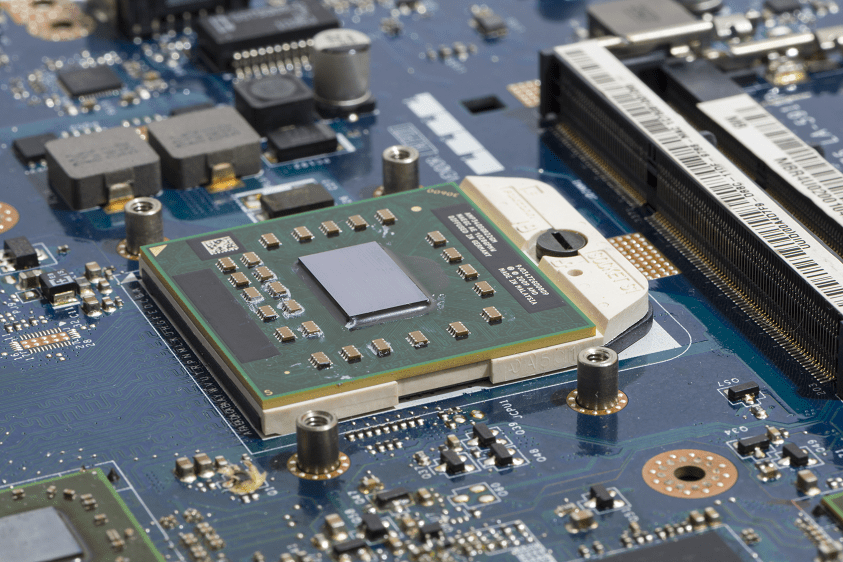
Printed circuit boards (PCBs) are found in all but the simplest electronic devices. Because PCBs featuring embedded or non-embedded components are protected by equipment housing, they seldom experience physical stress that could cause damage, such as warping and cracking.

However, because equipment that contains PCBs frequently contains a ventilation system, PCBs are subject to accumulations of dust, oil particles, or other particulate matter that can pass through the ventilation slots, forming a stable layer of accumulation on the boards.

There are two options for addressing the situation: Eliminate accumulating particulate matter from the environment where PCBs are present, or use PCB cleaning solvents to remove accumulations. Many companies and organizations find the second option more feasible than the first.

Choosing PCB Cleaning Solvents

Because equipment housing — as well as parts inside the housing, in some cases — must be removed to access PCBs, cleaning them can be a pain. However, if they carry accumulations, the electrical conductivity of the boards can suffer. With this in mind, we look at three key performance indicators of PCB cleaning solvents that should be considered before purchase.

  1. Dielectric Formulation

If you need to clean PCBs while the equipment containing them remains energized, using a solvent with a dielectric formulation is a must. The dielectric in the solvent serves as a buffer that prevents electricity from traveling through the solvent and delivering a strong shock. The more live voltage is involved, the more crucial it becomes to use a dielectric solvent for safety reasons.

  1. Solvent Residue

Solvent residue can spell doom for the functionality of PCBs, especially if the residue contains  a dielectric that impedes transmission of electricity. Even when a dielectric isn’t present, the presence of residue poses a common problem: Particulate matter is attracted to the residue. Consequently, using a solvent that leaves a residue can require PCBs to be cleaned more frequently than if a non-residue solvent were used.

  1. Compatibility With Materials

Unless PCBs are removed from their devices for individual cleaning, the user needs a PCB cleaning solvent that won’t harm materials that surround the boards, particularly plastic and metal computer components.

PCB cleaning solvents are often used aerosol form to ensure solvent is dispersed uniformly across the cleaning surface. The aerosol will also contact nearby components, and should be selected based on compatibility with the components’ materials.

Need PCB Cleaning Solvents?

If so, Ecolink is a great place to get you need. We offer eco friendly stock solvents that are suited for cleaning PCBs, as well as create custom solvents that are designed for specific users.

Choose the method of solvent dispersal you need (e.g., aerosol, hand wipe, pump spray, etc.) and order your solvent in a small volume, a large volume, or something in-between. Before you order, you also have the option of receiving a free test sample, with no obligation to buy.

To get started on selecting an environmentally preferred PCB cleaner, call us today at 800-563-1305, or send us an email through our contact form. We look forward to assisting you!

Search here

Don’t forget to share this post!

Categories

Suggested Blog Posts

View all News
By Mark
Ensuring Safety: The Importance of PPE for Handling Chemicals
Jul 24 2026

Ensuring Safety: The Importance of PPE for Handling Chemicals

Chemical-related workplace injuries remain a persistent and costly problem across manufacturing, construction, and industrial maintenance sectors. When it comes to...
By Mark
Essential Factors to Evaluate When Selecting Boiler Water Treatment Chemicals
Jul 20 2026

Essential Factors to Evaluate When Selecting Boiler Water Treatment Chemicals

Selecting the right boiler water treatment chemicals is one of the most consequential decisions you can make for the longevity, safety, and efficiency of your boiler...
By Mark
Common Causes of Foaming in Industrial Water and Effective Control Methods
Jul 17 2026

Common Causes of Foaming in Industrial Water and Effective Control Methods

Excessive foam in industrial water systems disrupts operations, reduces treatment efficiency, causes overflow events, and creates worker safety hazards that cost...
By Mark
Key Benefits of Using an Aerosol Degreaser for Electronics
Jul 13 2026

Key Benefits of Using an Aerosol Degreaser for Electronics

Grease, flux residue, dust, and moisture accumulation on circuit boards and electrical contacts are among the leading causes of premature equipment failure in...
By Mark
What Is a Flux Remover: Benefits, Usage, and Appropriate Selection Guide
Jul 10 2026

What Is a Flux Remover: Benefits, Usage, and Appropriate Selection Guide

Flux residues left on printed circuit boards after soldering are one of the leading causes of premature electrical failures in electronics manufacturing. These...
By Mark
How Do Water-Based Cleaners Remove Grease from Industrial Metal Parts Safely
Jul 10 2026

How Do Water-Based Cleaners Remove Grease from Industrial Metal Parts Safely

Water-based cleaners remove grease from industrial metal parts safely by using surfactants, pH builders, emulsifiers, corrosion inhibitors, heat, and agitation to...
By Khatera Barati
Khatera Barati - Digital Marketing Content Intern
Jul 07 2026

From WordPress to SEO: My Ecolink Marketing Internship

Reflecting on My Marketing Internship at Ecolink As my internship with Ecolink comes to an end, I’ve had the opportunity to reflect on how much I’ve learned over the...
By Mark
Why Industrial Lubricants Are the Backbone of Modern Machinery
Jul 06 2026

Why Industrial Lubricants Are the Backbone of Modern Machinery

Improper lubrication causes 64% of bearing failures, making it the single greatest preventable cause of machinery breakdown across every industrial sector. That...
By Mark
What Is an Epoxy Paint Stripper and What Are Its Uses?
Jun 29 2026

What Is an Epoxy Paint Stripper and What Are Its Uses?

An epoxy paint stripper is a heavy-duty chemical solution used to soften, swell, and remove cured epoxy paint from surfaces where standard paint removers are...
By Mark
How Boiler Water Treatment Chemicals Prevent System Corrosion
Jun 25 2026

How Boiler Water Treatment Chemicals Prevent System Corrosion

Boiler water treatment chemicals prevent system corrosion by controlling the conditions that allow metal attack: dissolved oxygen, carbon dioxide, low pH, hardness...
View all News