
Ecolink, Inc.
Q
  1. Home
  2. Aerospace Cleaners
  3. Household Versus Industrial Chemicals

Household Versus Industrial Chemicals

Chemicals can be found pretty much everywhere these days—in cleaning products, cosmetics, clothing, agriculture, etc. With so many different applications, they really make our lives easier. However, chemicals can be extremely hazardous to both the environment and to humans if they are not used or disposed of properly. Chemical safety is crucial to avoiding dangerous accidents, and part of chemical safety is knowing the difference between household chemicals and industrial chemicals.  

industrial chemicals

What is a Household Chemical? 

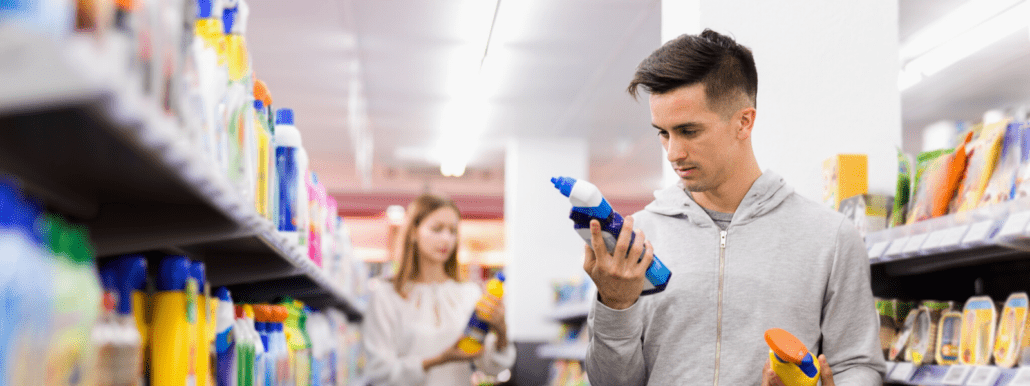
Household chemicals are non-food chemicals that are commonly used in everyday cleaning, hygiene, or even pest control around the home. Common chemicals you might find in your home include: 

  • bleach 
  • ammonia 
  • paint thinner  
  • washing detergent 
  • air fresheners 
  • cosmetics  

Household chemicals, like any chemical, can be very dangerous if not used properly. In fact, the CDC found that in 2019, poisonings were the leading cause of unintentional injury deaths, resulting in nearly 40% of all unintentional injury deaths. Some of the most dangerous substances are found in: 

  • solvents 
  • cleaners 
  • pesticides 
  • automotive care products 

When using chemicals in the home, be sure to buy the correct product for the desired job and to read and follow the label instructions very carefully. If an accident occurs, get help from the Poison Control Center immediately.  

What is an Industrial Chemical? 

Industrial chemicals are produced in large quantities and can be applied in many industrial settings including: 

  • plastics 
  • adhesives  
  • solvents 
  • cosmetics 
  • cleaning products 

Industrial products are defined as any chemical that isn’t: 

  • veterinary 
  • agricultural  
  • pharmaceutical 
  • therapeutic 
  • food-related 

These substances may be used as ingredients in commercial products, or directly in production processes. Essentially, industrial compounds cover a broad spectrum of uses that is much larger than household compounds.  

Differences between Industrial Chemicals and Household Chemicals? 

Household and industrial products have a wide variety of differences. Mainly, they tend to vary in:  

  • size  
  • cost 
  • strength 

With industrial chemicals being larger, higher in price, and stronger concentrates. Since household products do not need to be as strong as those needed for industrial purposes, they can be made with cheaper ingredients, thus making them cheaper in cost. Household chemicals also come in much smaller quantities than their industrial counterparts, because the amount of a product needed for an industrial job is much larger than that of a household job.  

Have More Questions About Industrial Chemicals? 

Contact the EcoLink, Inc. team here today to learn more about which chemicals might best fit your needs.  

Search here

Don’t forget to share this post!

Categories

Suggested Blog Posts

View all News
By Khatera Barati
Khatera Barati - Digital Marketing Content Intern
Jul 07 2026

From WordPress to SEO: My Ecolink Marketing Internship

Reflecting on My Marketing Internship at Ecolink As my internship with Ecolink comes to an end, I’ve had the opportunity to reflect on how much I’ve learned over the...
By Mark
What Is an Epoxy Paint Stripper and What Are Its Uses?
Jun 29 2026

What Is an Epoxy Paint Stripper and What Are Its Uses?

An epoxy paint stripper is a heavy-duty chemical solution used to soften, swell, and remove cured epoxy paint from surfaces where standard paint removers are...
By Mark
How Boiler Water Treatment Chemicals Prevent System Corrosion
Jun 25 2026

How Boiler Water Treatment Chemicals Prevent System Corrosion

Boiler water treatment chemicals prevent system corrosion by controlling the conditions that allow metal attack: dissolved oxygen, carbon dioxide, low pH, hardness...
By Mark
Types of Water Treatment Chemicals
Jun 22 2026

Types of Water Treatment Chemicals

Choosing the right water treatment chemicals starts with knowing what the water contains, what the system needs to protect, and what regulations apply. The main types...
By Mark
Industrial Lubricants: Types, Uses, and How They Work
Jun 19 2026

Industrial Lubricants: Types, Uses, and How They Work

Industrial lubricants reduce friction, control heat, protect parts, and help industrial machinery run reliably under demanding operating conditions. If you need to...
By Mark
Industrial Degreaser: How to Keep Machinery Clean and Performing Efficiently
Jun 15 2026

Industrial Degreaser: How to Keep Machinery Clean and Performing Efficiently

Contaminated machinery runs hotter, wears faster, wastes energy, and fails sooner. The right industrial degreaser removes grease, oil, grime, carbon deposits, and...
By Mark
How Do Water-Based Cleaners Remove Grease from Industrial Metal Parts Safely
Jun 12 2026

How Do Water-Based Cleaners Remove Grease from Industrial Metal Parts Safely

Water-based cleaners remove grease from industrial metal parts safely by using surfactants, pH builders, emulsifiers, corrosion inhibitors, heat, and agitation to...
By Tomas Fernandez
Image of Latin America Region "LATAM Chemical Trends 2026"
Apr 16 2026

Latin America Chemical Trends 2026

A Strait 29 Nautical Miles Wide Is Reshaping Chemical Supply Chains Across Latin America. Here's What You Need to Know The Strait of Hormuz doesn't appear on most...
By Sydney Manns
Find HPLC-Grade Acetonitrile with Ecolink today! Availbale in 4x1, 5 gallon and 55 gallon options!
Mar 20 2026

Benefits of Acetonitrile HPLC Grade for Your Laboratory Needs

HPLC-grade Acetonitrile is one of the most widely used high-purity solvents in analytical chemistry, pharmaceuticals, environmental testing, and food safety.  Its...
By Khatera Barati
Acetone VS Paint Thinner for Cleaning, purchase from Ecolink today!
Jan 13 2026

Acetone vs. Paint Thinner for Cleaning: Which One Works Better and Why?

Acetone vs Paint Thinner for Cleaning  If you’re looking to purchase chemicals for your industrial cleaning application, it’s important to educate yourself on each...
View all News