
Q
  1. Home
  2. OSHA
  3. How can OSHA's Chemical Safety Resources Improve Worker Safety?

How can OSHA’s Chemical Safety Resources Improve Worker Safety?

Last updated:

Tens of thousands of workers become sick from exposures to the countless hazardous chemicals used in the workplace as part of a job function each day in the United States. These sicknesses sometimes result in long term, adverse health issues, and even death. OSHA, or the Occupational Safety and Health Administration – an offshoot of the U.S. Department of Labor – has recently launched two new web resources that should assist businesses with resources that will work toward keeping workers safe. chemical safety for workers
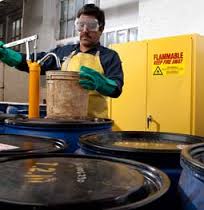
Numerous types of chemicals are suspected of being harmful to people and to the environment, and many believe that OSHA’s criteria concerning exposure standards are out of date, not updated frequently enough, and provide inadequate information on how to enable complete protection from the hazardous chemicals that OSHA tries to regulate in the workplace. Therefore, to combat the perceived issue of insufficient protective resources, OSHA has put in place new resources to ensure maximization of its criteria standards. The first resource OSHA has created is a toolkit to help identify safer, cleaner chemicals that can be used as an alternative to the more hazardous chemicals. This toolkit takes industrial businesses, along with its workers, step by step through the methods, tools, and guidance information to help significantly reduce, or altogether eliminate hazardous chemicals, as well as help industrial businesses make informed substitution decisions in the workplace by finding, and then transitioning to a safer chemical.

OSHA has also recently created another new web resource, known as the Annotated Permissible Exposure Limits, also called annotated PEL tables. Annotated PEL tables help enable employers to voluntarily adopt newer, advanced, and more protective workplace exposure limits. OSHA’s annotated PEL tables appoint mandatory limits on the amount, or concentration of a chemical substance that could be released into the air to protect workers against the health effects of these hazardous chemicals. Due to concerns about OSHA’s ability to police the numerous hazardous chemicals in the United States, OSHA promises to continue to enforce its mandated PEL list. However, despite OSHA’s adoption of its annotated PEL table, the consistent flow of new scientific data, along with research industrial experts and developments in technology indicate that, in most instances, the mandatory limits put forth are still not sufficient enough to completely protect the health of workers.

Despite the pessimists out there that say OSHA has not established enough guidelines and resources regarding the improvement of worker safety through the enforcement of stricter chemical safety procedures, it is impossible to discount the effort made by the regulating body to improve the situation of too many hazardous chemicals used by industrial businesses. Ecolink works toward helping the circulation of resources and information made available to combat the use of hazardous chemicals.

Search here

Don’t forget to share this post!

Categories

Suggested Blog Posts

View all News
By Tomas Fernandez
Image of Latin America Region "LATAM Chemical Trends 2026"
Apr 16 2026

Latin America Chemical Trends 2026

A Strait 29 Nautical Miles Wide Is Reshaping Chemical Supply Chains Across Latin America. Here's What You Need to Know The Strait of Hormuz doesn't appear on most...
By Sydney Manns
Find HPLC-Grade Acetonitrile with Ecolink today! Availbale in 4x1, 5 gallon and 55 gallon options!
Mar 20 2026

Benefits of Acetonitrile HPLC Grade for Your Laboratory Needs

HPLC-grade Acetonitrile is one of the most widely used high-purity solvents in analytical chemistry, pharmaceuticals, environmental testing, and food safety.  Its...
By Ecolink Team
Acetone VS Paint Thinner for Cleaning, purchase from Ecolink today!
Jan 13 2026

Acetone vs. Paint Thinner for Cleaning: Which One Works Better and Why?

Acetone vs Paint Thinner for Cleaning  If you’re looking to purchase chemicals for your industrial cleaning application, it’s important to educate yourself on each...
By Ecolink Team
Where to Buy Denatured Alcohol Near Me
Dec 29 2025

Where to Buy Denatured Alcohol Near Me

Denatured alcohol can be purchased through local hardware retailers for small-scale use or via industrial chemical suppliers for high-volume manufacturing and...
By Ecolink Team
Dielectric Spray Guide: Featuring Ecolink’s 22oz Trigger Solution
Dec 17 2025

Dielectric Spray Guide: Featuring Ecolink’s 22oz Trigger Solution

Dielectric Spray Guide: Featuring Ecolink’s 22oz Trigger Solution  Dielectric sprays are essential for keeping delicate electrical components from moisture, corrosion,...
By Ecolink Team
Where to Purchase Isopar M for Sale Online: Ecolink’s Advantage
Dec 01 2025

Where to Purchase Isopar M for Sale Online: Ecolink’s Advantage

Where to Purchase Isopar M for Sale Online: Ecolink’s Advantage  When it comes to finding and sourcing industrial solvents such as Isopar M, you need a reliable and...
By Ecolink Team
What is Isopar M Used For? - Purchase Isopar M
Nov 26 2025

What is Isopar M and what is it used for? Applications & Advantages

Isopar M is a highly pure, odorless isoparaffinic solvent used in a range of industries.  Why?   Because of its low toxicity, clean evaporation, and consistency, it...
By Ecolink Team
What is Isopar L User For?
Nov 17 2025

What is Isopar L Used For?

Looking for insight into Isopar L? You’ve come to the right place.  In this blog post, we’re going to take a closer look at what Isopar L is, what it’s used for, and...
By Ecolink Team
Hydrofluoroether Solvent
Nov 03 2025

Hydrofluoroether Solvent Guide

With all the industrial solvents available on the market, it can be overwhelming to find one that works well and has a low toxicity.   Luckily, hydrofluoroether (HFE)...
By Ecolink Team
White Oil - Ecolink
Oct 27 2025

White Oil in Food Packaging Applications: What You Need to Know

White oil is an extremely versatile oil with many benefits—especially for the food manufacturing industry.  But what is it? And what makes this oil so special for...
View all News